XR validation accessory
A practical format for research studies, application testing and qualified demonstrations.
Near-field illumination for XR
Sigrist XR is developing a patented optical layer that illuminates the wearer’s own facial near field, nose and brows. Designed to add scene-matched, body-anchored peripheral context in XR devices, the layer is intended to reduce the perceptual discontinuity from bright display to dark headset, in an unobtrusive and natural manner.
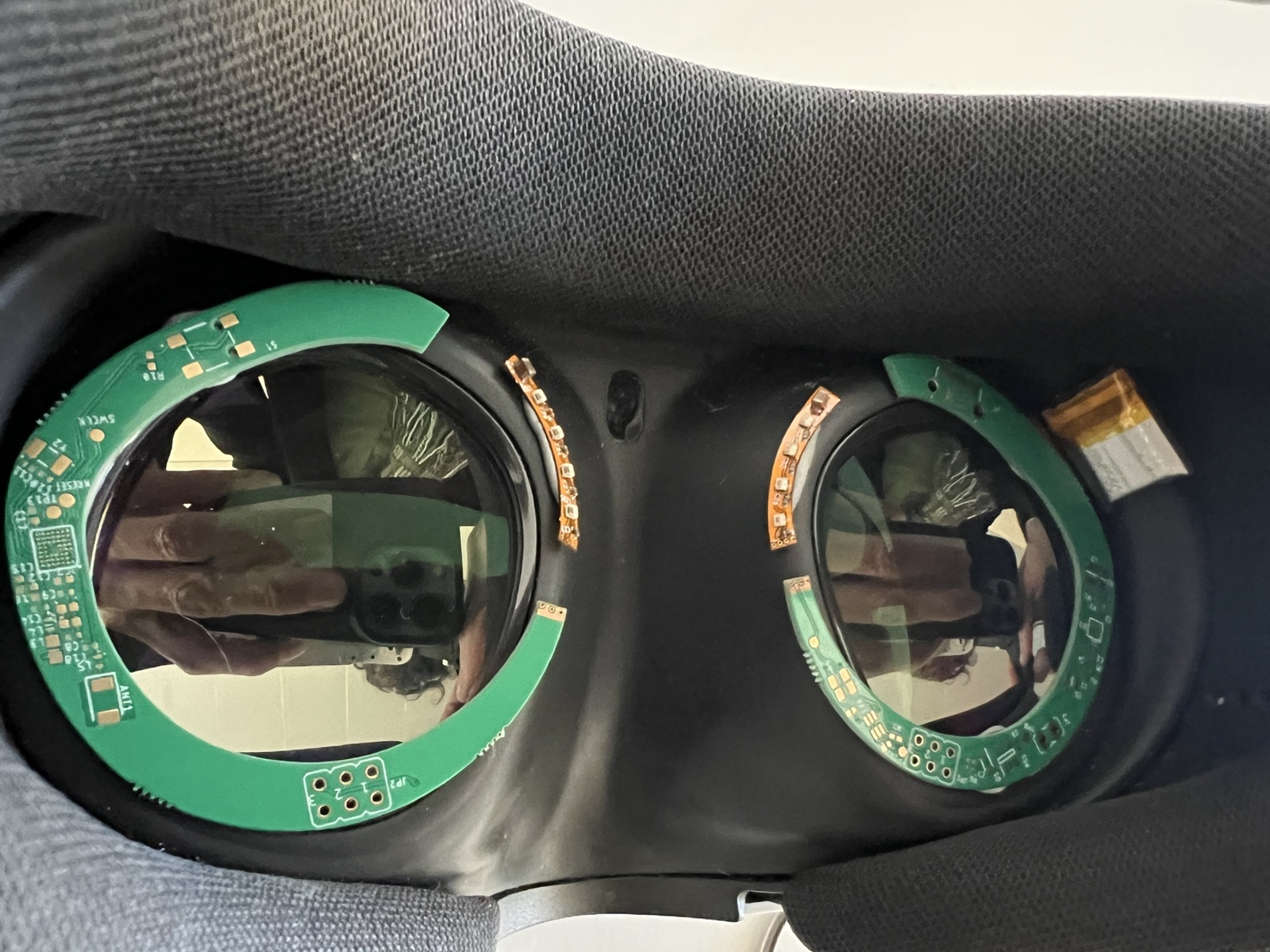 Working MVP · 2026
Validation in progress
MVP validation project with OST University, Switzerland
Working prototype
Hardware feasibility established
Venture Kick
Stage 1 application in progress
The problem
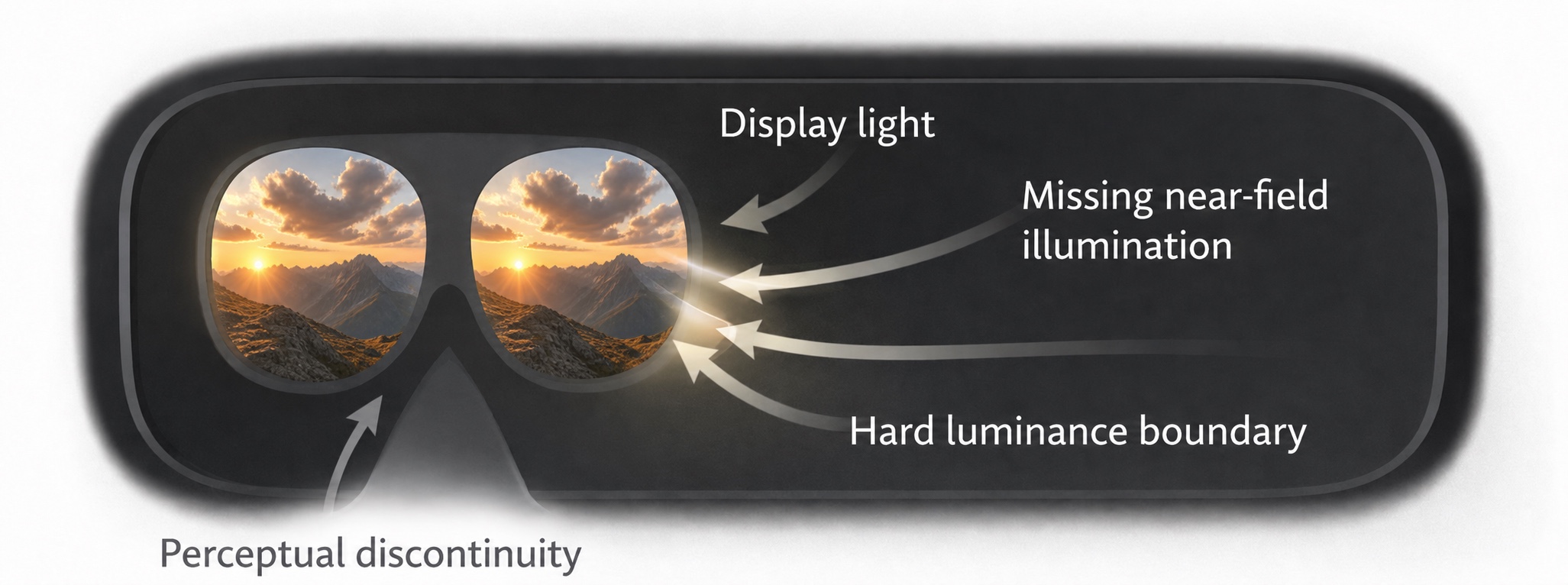
Conventional headsets surround vivid displays with a dark interior. The wearer’s nose and nearby facial surfaces disappear.
You are left with a hard luminance boundary, perceptual discontinuity, and missing near-field illumination. Sigrist XR is testing whether restoring near-field illumination can improve the experience without changing rendered on-screen content.
What it does:
Can a restored body reference make the boundary of rendered vision feel less abrupt?
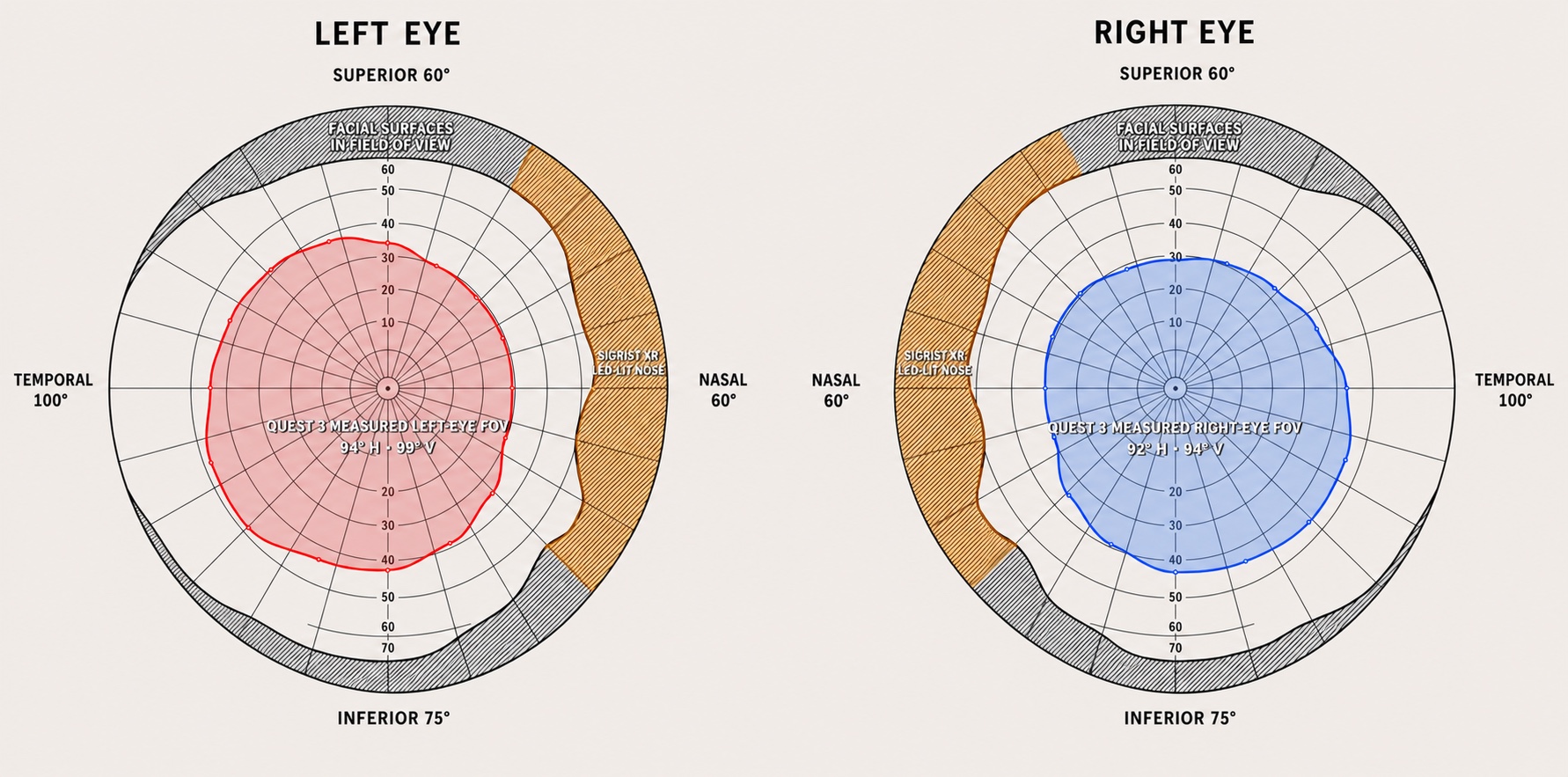
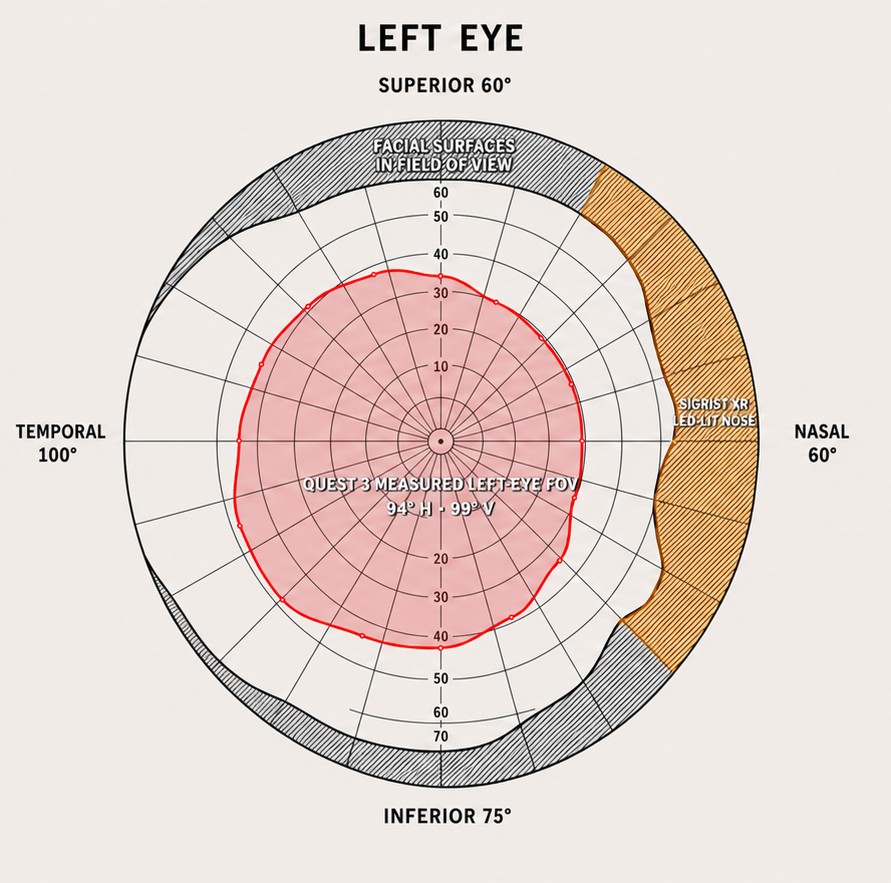
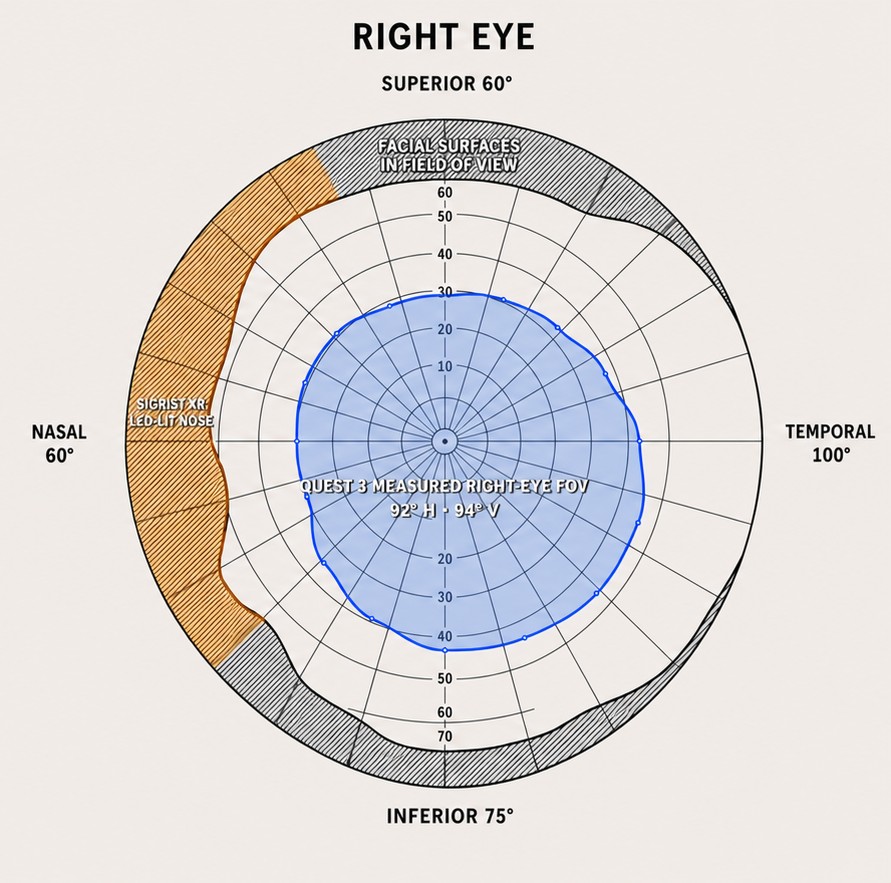
Measured Quest 3 monocular fields compared with visible facial surfaces and the nose region reached by Sigrist XR illumination.
The technology
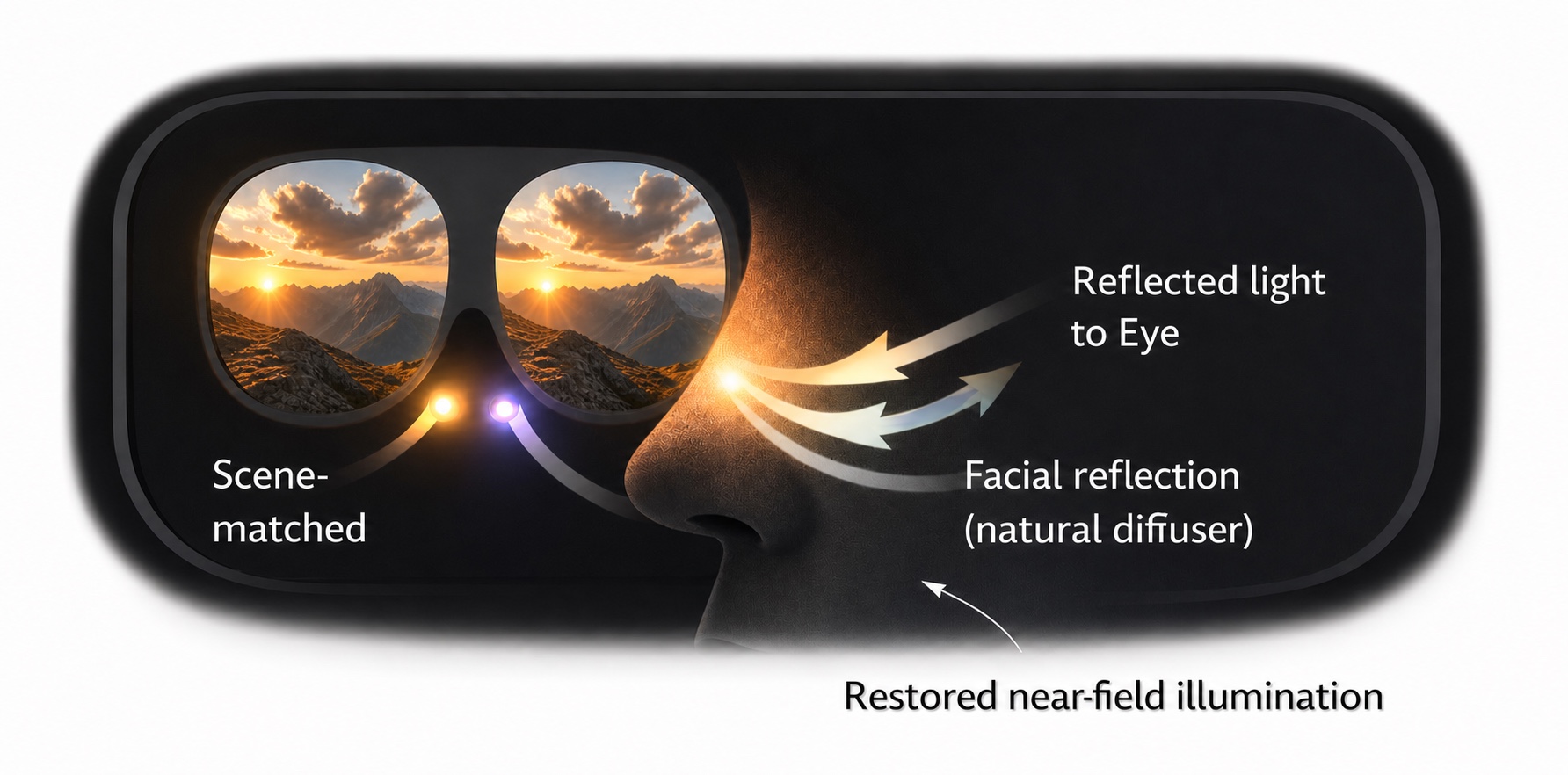
A compact optical layer directs light exclusively toward the nose and adjacent facial surfaces. The wearer’s own skin becomes a natural diffuser for body-anchored peripheral illumination.
Using on-device screen capture, the system derives the virtual scene’s lighting environment in real time, 30 times per second.
Compact emitters direct light precisely toward the nose and adjacent surfaces, so that light enters the eyes as peripheral light reflected off those facial features.
Facial illumination adds a body-anchored peripheral light source in a natural and expected way.
The prototype
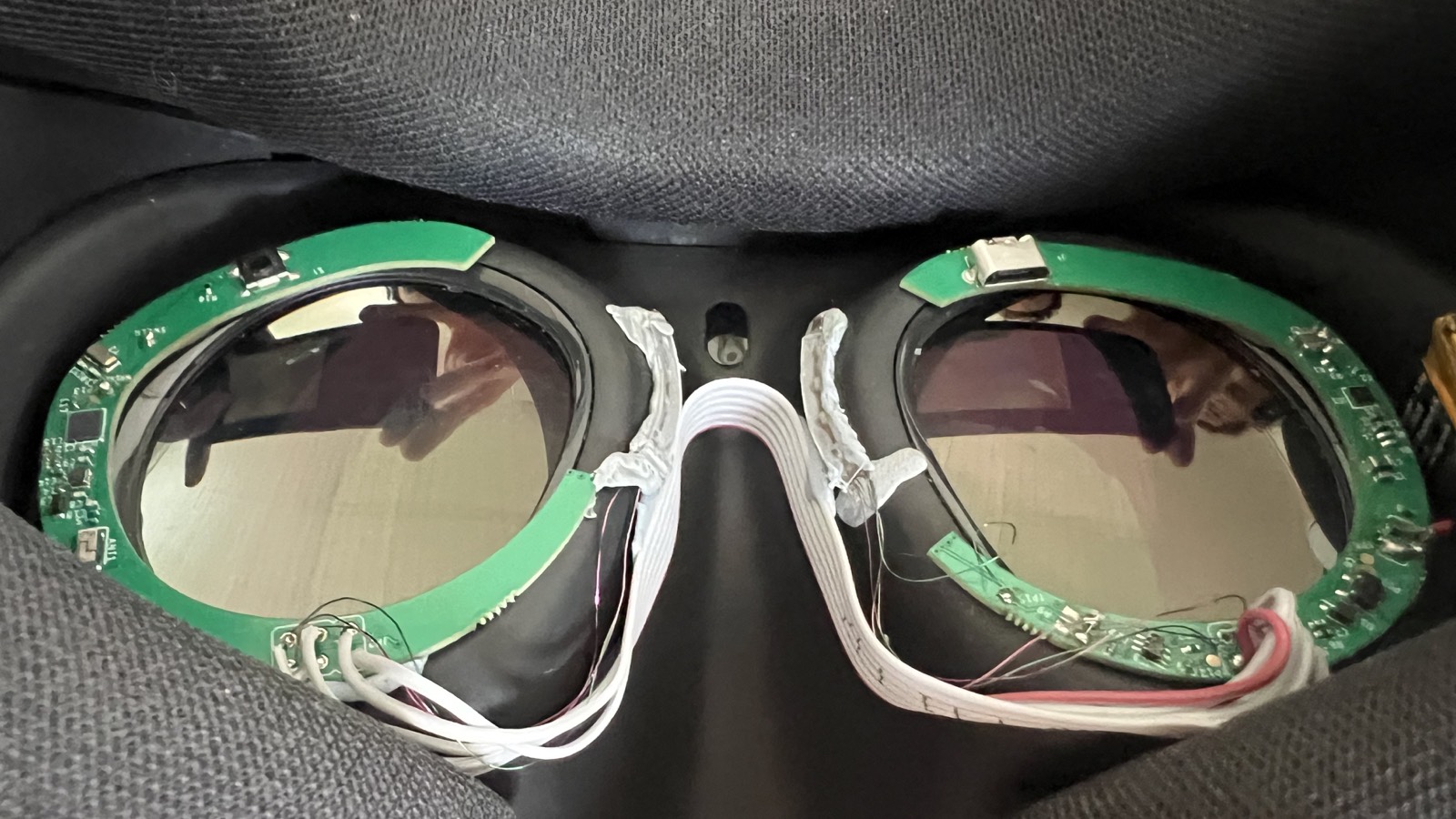
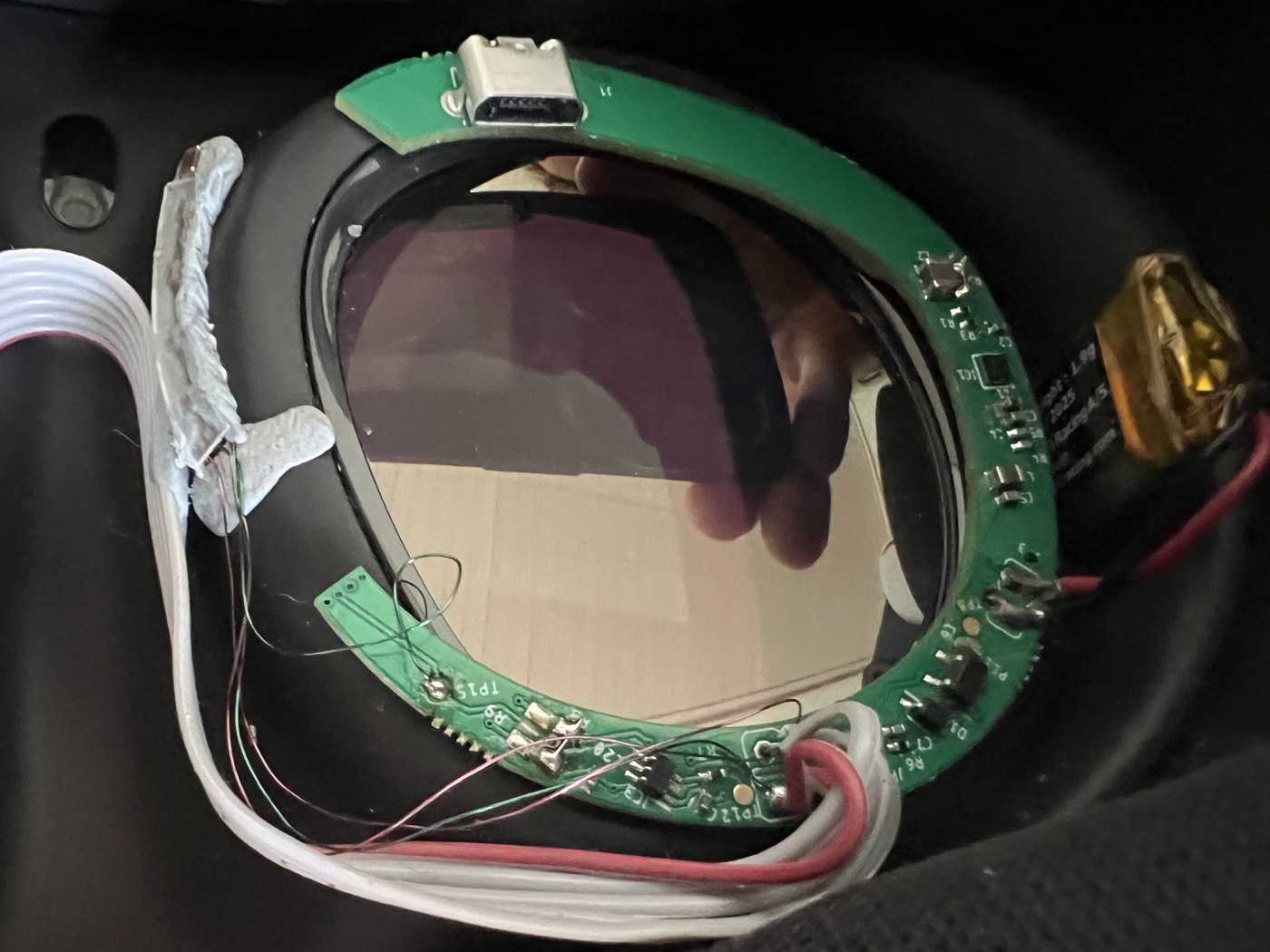
The MVP enables safety evaluation and initial testing with participants.
Established today
Controlled illumination can be integrated around existing optics.
Under evaluation
Perceived field of view, distraction, comfort and spatial experience.
Commercial path
The prototype creates an immediate platform for testing and partner demonstrations. The long-term destination is licensing and co-development with headset manufacturers.
A practical format for research studies, application testing and qualified demonstrations.
An optical, mechanical and control package for integration into future headset architectures.
Roadmap
Compare baseline and illumination conditions with predefined, decision-relevant measures.
Translate results into optical, mechanical and control requirements for partner evaluation.
Test the layer in a selected manufacturer or application-partner integration.
Founder & contact
Sigrist XR is speaking with perception researchers, optical engineers, XR integrators and headset manufacturers.
Valentin studied entrepreneurship and founded Sigrist Glacé GmbH in 2020. Sigrist XR is his second company, combining his passion for building businesses with hands-on work on the perceptual concept, patent strategy, working hardware and partnerships behind the technology.